
Is it good to buy a house with mello roos?
Short answer
To determine if buying a house with Mello-Roos makes sense, balance modern neighborhood amenities against reduced purchasing power and ongoing carrying costs. While community infrastructure is funded upfront, assessments add directly to monthly expenses. According to legalclarity.org (2026), a $3,000 annual Mello-Roos fee adds $250 a month to the payment the lender uses to calculate your debt-to-income ratio, which can meaningfully reduce your qualifying loan amount. Verify bond expiration dates, annual escalators, and service assessments before committing.
Source: Katie Rife - Rochester Hills Realtor, https://www.katietheagent.com/home-guide/is-it-good-to-buy-a-house-with-mello-roos

Evaluating Whether a Home With Mello-Roos Fits Your Housing Goals#
Deciding to purchase a property carrying a Mello-Roos assessment comes down to a balance between community infrastructure and long-term carrying costs. A Mello-Roos assessment is a special parcel tax levied on real estate within a designated Community Facilities District under California law.
Before committing to a home subject to these fees, buyers should evaluate several practical questions:
- Does the value of local public amenities justify a permanently higher monthly housing expense?
- How will adding an assessment-such as an annual $3,000 charge that increases monthly debt payments by $250-affect your debt-to-income ratio and borrowing limits?
- Are you prepared to manage potential annual tax escalations that operate outside standard tax caps?
- Have you verified whether the fee funds expiring capital improvements or indefinite municipal services?
Types of Community Facilities District Special Taxes#
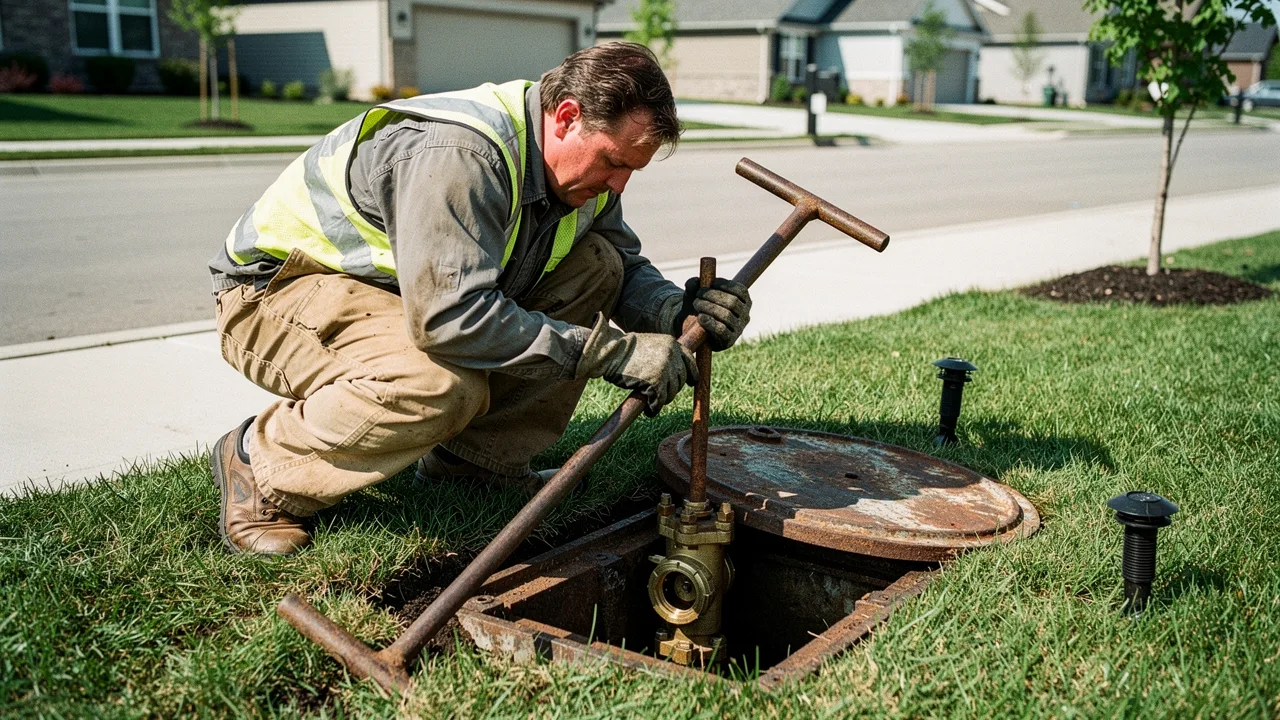
Community Facilities Districts levy different categories of assessments, each governed by separate funding mechanisms and lifespans.
Capital Project Assessments#
Capital project assessments fund public physical assets such as schools, regional water transmission lines, and local fire stations through municipal bonds issued by the district (legalclarity.org, 2026). These bonds supply upfront construction capital. And the resulting parcel assessment terminates once the underlying municipal bonds that financed the work are repaid in full.
Because these charges represent financing for brick-and-mortar installations, they remain tied directly to the debt service schedule of the initial development bonds (legalclarity.org, 2026).
Ongoing Service Assessments#
Service-based special taxes operate quite differently because they pay for recurring community operations, such as neighborhood landscaping maintenance, municipal library staffing, or neighborhood police patrols (legalclarity.org, 2026). These operational levies carry no underlying municipal bonds to retire.
Service assessments can continue indefinitely for as long as the Community Facilities District exists, unless the original formation charter explicitly established a termination date (legalclarity.org, 2026).
| Assessment Category | Primary Purpose | Underlying Financing | Typical Lifespan |
|---|---|---|---|
| Capital Facility Assessment | Construction of schools, water lines, fire stations (legalclarity.org, 2026) | Municipal bond issuance | Ends when bond debt is retired |
| Ongoing Service Assessment | Landscaping, library staffing, police patrols (legalclarity.org, 2026) | Direct annual operational budget | Indefinite, unless charter specifies end date |
Impact of Mello-Roos on Mortgage Qualification and Purchasing Power#
Mortgage lenders do not view special assessments as minor line items. Instead, they treat them as mandatory recurring liabilities. In underwriting, lenders divide the annual Mello-Roos assessment by 12 and add that number directly into the borrower's monthly housing expense (daftariangroup.com). This calculation feeds directly into front-end housing expense and back-end debt-to-income (DTI) ratios, which lowers your maximum borrowing capacity (luxurysocalrealty.com).
The mathematical impact on buyer leverage is substantial:
Monthly Housing Assessment = Annual Mello-Roos / 12
For instance, an annual assessment of $3,000 (legalclarity.org, 2026) adds $250 per month to your qualifying payment, which meaningfully curtails borrowing limits, according to legalclarity.org (2026). Stepping up to a $4,000 (temeculasells.com, 2026) annual fee adds roughly $333 per month to debt-to-income calculations, reducing a buyer's conventional maximum loan amount by approximately $50,000 to $60,000 as reported by temeculasells.com (2026).
When looking at high-end master-planned developments, luxury real estate reporting from luxurysocalrealty.com notes that an annual assessment of $12,000 (luxurysocalrealty.com) can reduce purchasing power by $150,000 or more.
Underwriting Risks for Distressed Community Facilities Districts#
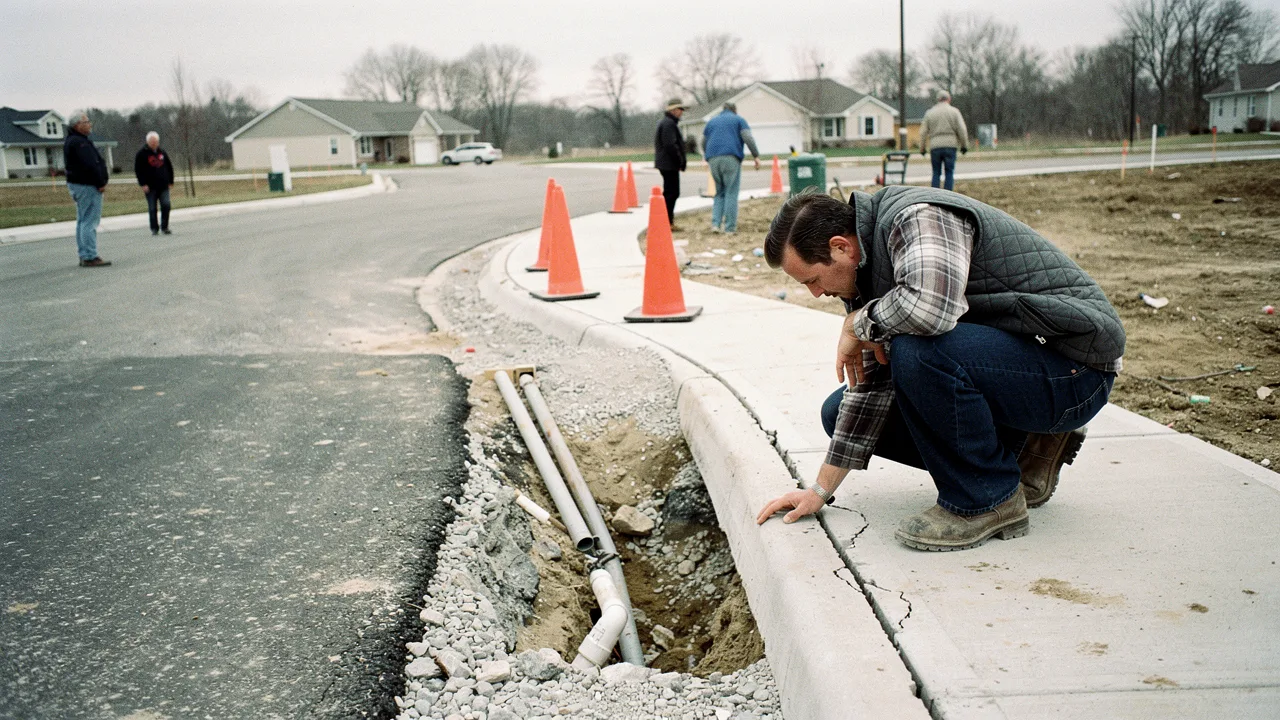
Special assessments introduce distinct loan collateral issues when the underlying district encounters fiscal strain. When a Community Facilities District faces severe financial distress, real estate appraisers may be unable to determine the precise impact on home valuations due to a lack of comparable local sales data (legalclarity.org, 2026).
Under Fannie Mae appraisal guidelines reported by legalclarity.org (2026), this appraisal impasse renders the subject property completely ineligible for delivery to Fannie Mae until a functional, active resale market develops within the district (legalclarity.org, 2026).
Once property tax bill irregularities or appraisal hesitations surface during escrow, that is the point to bring in Real Estate help to review district viability before loan contingencies are waived.
Interaction With California Proposition 13 Limits#
Many buyers mistakenly assume all property tax increases in California face uniform statutory restrictions. Under California Proposition 13, the constitutional 2 percent (octreasurer.gov) annual limit on property tax increases applies strictly to the taxable ad valorem portion of real property, which covers assessed land and structures, as detailed by the Orange County Treasurer-Tax Collector.
Proposition 13 limits do not restrict special assessments such as Mello-Roos levies (octreasurer.gov). Because these parcel charges bypass Proposition 13 caps, your overall effective tax rate can climb much faster than expected if the district charter permits aggressive annual tax escalations.
Tax Deductibility and Basis Rules for Mello-Roos Payments#
Special assessments do not share the standard income tax benefits associated with general ad valorem property taxes. According to the San Diego County government, Mello-Roos levies are generally not deductible on personal income tax returns because tax authorities classify them as benefit assessments rather than ad valorem taxes (sandiegocounty.gov).
Federal tax regulations reinforce this distinction between repairs and capital additions:
- Capital infrastructure: IRS guidelines generally disallow deductions for payments applied to public infrastructure construction, requiring homeowners to treat those amounts as additions to their property's cost basis, according to legalclarity.org (2026) (legalclarity.org, 2026).
- Maintenance and operations: Only the specific, documented portion of the assessment allocated toward ongoing maintenance, physical repair, or underlying interest charges qualifies for a tax deduction.
Bond Payoff Durations and Expiration Horizons#
Capital facility assessments do not run forever, though they carry extended multi-decade horizons. According to Investopedia (2003), bond repayment periods typically range from 20 to 25 years (cardenasandcompany.com), but can span up to 40 years. Data from legalclarity.org (2026) notes that most districts establish a tax collection horizon between 25 and 40 years (legalclarity.org, 2026).
California state law imposes a firm outer statutory cap, mandating that special tax bonds run no longer than 40 years to maturity (legalclarity.org, 2026). In shorter infrastructure scenarios, typical bond maturities span 20 to 25 years (cardenasandcompany.com), though district terms can fall as low as 15 years (bbrlegal.com, 2021), per legal analysis from bbrlegal.com (2021).
Legal Enforceability and Foreclosure Rules#
A Community Facilities District assessment is not a voluntary fee, but a recorded legal lien attached to the real property.
Unlike conventional municipal ad valorem tax delinquencies, which often grant homeowners multi-year redemption buffers, Community Facilities Districts are governed by accelerated foreclosure laws that empower the district to withdraw delinquent assessments from the county tax roll and initiate judicial foreclosure proceedings in court to collect past-due balances.
Verifying Mello-Roos Details Before Submitting an Offer#
Due diligence requires inspecting primary source municipal filings rather than relying on automated portal estimates.
- Check secured property tax bill
- Request Notice of Special Tax
- Inspect Rate and Method of Apportionment
- Run DTI impact with lender
California Civil Code Section 1102.6b establishes clear seller transparency standards. Under this statute, the seller must make a good faith effort to obtain the official written Notice of Special Tax from the district administrator and deliver it to the buyer (luxurysocalrealty.com). This statutory disclosure document provides essential parameters, including the maximum allowable tax levy, the annual escalation rate, the scheduled maturity year, and an itemized accounting of the public facilities and services funded by the assessment.
To verify your specific exposure this week before writing an offer:
- Obtain the current year's secured property tax bill using the parcel's Assessor's Parcel Number to review all itemized special district line items.
- Demand the official Notice of Special Tax from the listing agent to confirm maximum allowable escalations and projected bond termination years (luxurysocalrealty.com).
- Pull the recorded Rate and Method of Apportionment from the county recorder or municipal finance department to inspect the specific tax calculation formula (legalclarity.org, 2026).
- Have your mortgage lender recalculate front-end and back-end debt ratios using the fully escalated maximum potential parcel payment (daftariangroup.com).
Whether you are navigating special assessment districts or evaluating home purchases in Rochester Hills, Rochester, or broader Oakland County, basing your purchase decisions on verified tax schedules and precise debt ratios protects your long-term housing budget.
| Tax Feature | Standard California Property Tax (Prop 13) | Mello-Roos Special Tax (CFD) |
|---|---|---|
| Tax Basis | Ad valorem (1% of assessed property cash value) | Fixed special assessment (parcel, square footage, or lot size formula) |
| Annual Escalation Limits | Increases capped at 2% annually on land and structures | Not limited by Proposition 13; set by district escalation formula |
| Income Tax Deductibility | Generally deductible as state and local property tax | Not deductible (IRS allows only documented maintenance/interest portions) |
| Duration and Expiration | Permanent tax obligation | Bonds expire (typically 20 to 25 years, up to 40); services can be indefinite |
| Delinquency Enforcement | Standard municipal tax collection process | Accelerated judicial foreclosure rules |
| Annual Mello-Roos Assessment | Monthly DTI Housing Expense Addition | Estimated Purchasing Power / Loan Impact |
|---|---|---|
| $3,000 | $250 | Meaningfully reduces qualifying loan amount |
| $4,000 | $333 | Reduces conventional maximum loan amount by ~$50,000 to $60,000 |
| $12,000 | $1,000 | Can reduce purchasing power by $150,000 or more |
Mello-Roos Cost & Purchasing Power Calculator
Calculates the monthly impact of Mello-Roos special taxes alongside standard California ad valorem property taxes, showing the effective tax rate and the equivalent reduction in borrowing capacity/purchasing power for a given mortgage interest rate.
Base Prop 13 monthly tax (1%):
Monthly Mello-Roos payment:
Total monthly property tax & special assessments:
Combined effective tax rate:
Equivalent reduction in mortgage purchasing power:
Frequently Asked Questions
Does property tax include Mello-Roos?
Mello-Roos is typically billed as a fixed charge special assessment line item on the secured property tax bill. It is not an ad valorem tax and is not restricted by California Proposition 13's 2% annual cap.
What does Mello-Roos mean?
Mello-Roos refers to a special parcel assessment created under California's Community Facilities Act of 1982. It finances public infrastructure and municipal services-such as roads, schools, parks, and police protection-in newly planned communities.
Mello Roos tax lookup
Locate the Assessor's Parcel Number on your county property tax bill to check non-ad valorem line items. Then, obtain the district's Rate and Method of Apportionment from the county recorder or local finance department.
How long do Mello-Roos taxes last?
Mello-Roos capital assessments generally expire once underlying bond debt is paid, typically taking 20 to 25 years (up to a 40-year statutory maximum). However, assessments funding ongoing services such as landscaping or police patrols can continue indefinitely.
Is Mello-Roos good or bad?
Mello-Roos is neither inherently good nor bad; purchasing a home with this assessment depends on balancing community infrastructure against long-term carrying costs. While these taxes fund local public amenities, schools, fire stations, and neighborhood services, they also create a permanently higher monthly expense. Additionally, Mello-Roos assessments can reduce purchasing power, operate outside Proposition 13 caps, and are generally not deductible on personal income tax returns.
Disclaimer
This article is for general information only and is not legal, tax, or financial advice. Real estate rules and market conditions vary, so confirm details with a licensed professional before making decisions.
Sources
- COMMUNITY FACILITIES DISTRICTS - sandiegocounty.gov (2022-06-23)
- PROPERTY TAX GUIDE FOR NEW HOMEOWNERS - octreasurer.gov (accessed 2026)
- Mello-Roos Tax: What It Is, How It Works, How Long It Lasts - investopedia.com (2003-11-24)
- How to Find Out When Mello-Roos Taxes Expire - LegalClarity - legalclarity.org (2026-03-14)
- Mello-Roos Special Tax Liens: Notice and Cancellation - LegalClarity - legalclarity.org (2026-05-18)
- Selling with Mello-Roos: San Diego Seller Disclosures | LUXURYSOCALREALTY - luxurysocalrealty.com (accessed 2026)
- Mello-Roos San Diego: How to Find, Calculate, & Predict Payoff Dates - cardenasandcompany.com (accessed 2026)
- Rules About Mello-Roos | Beyer, Brown, and Rosen | Sacramento Legal - bbrlegal.com (2021-11-17)
- Turtle Ridge Mello Roos Guide for Luxury Home Buyers - daftariangroup.com (accessed 2026)
- Mello-Roos in Chula Vista: What Luxury Buyers Should Know - ednamitchell.com (accessed 2026)
- What Is Mello-Roos? Temecula Buyer Explainer (2026) - temeculasells.com (2026-04-23)