
Is Rochester Hills more affordable than Birmingham or Troy?
Short answer
Choose Rochester Hills or Troy over Birmingham if your goal is minimizing monthly carrying costs and property tax burden without sacrificing space. According to U.S. Census Bureau QuickFacts (2020 to 2024), median selected monthly owner costs with a mortgage are $2,208 in Rochester Hills, matching Troy at $2,208, while Birmingham averages $3,461. Rochester Hills also provides larger average lots than Birmingham at identical baseline monthly ownership expenditures to Troy.
Source: Katie Rife - Rochester Hills Realtor, https://www.katietheagent.com/home-guide/is-rochester-hills-more-affordable-than-birmingham-or-troy
Comparing Housing Costs Across Rochester Hills, Birmingham, and Troy#
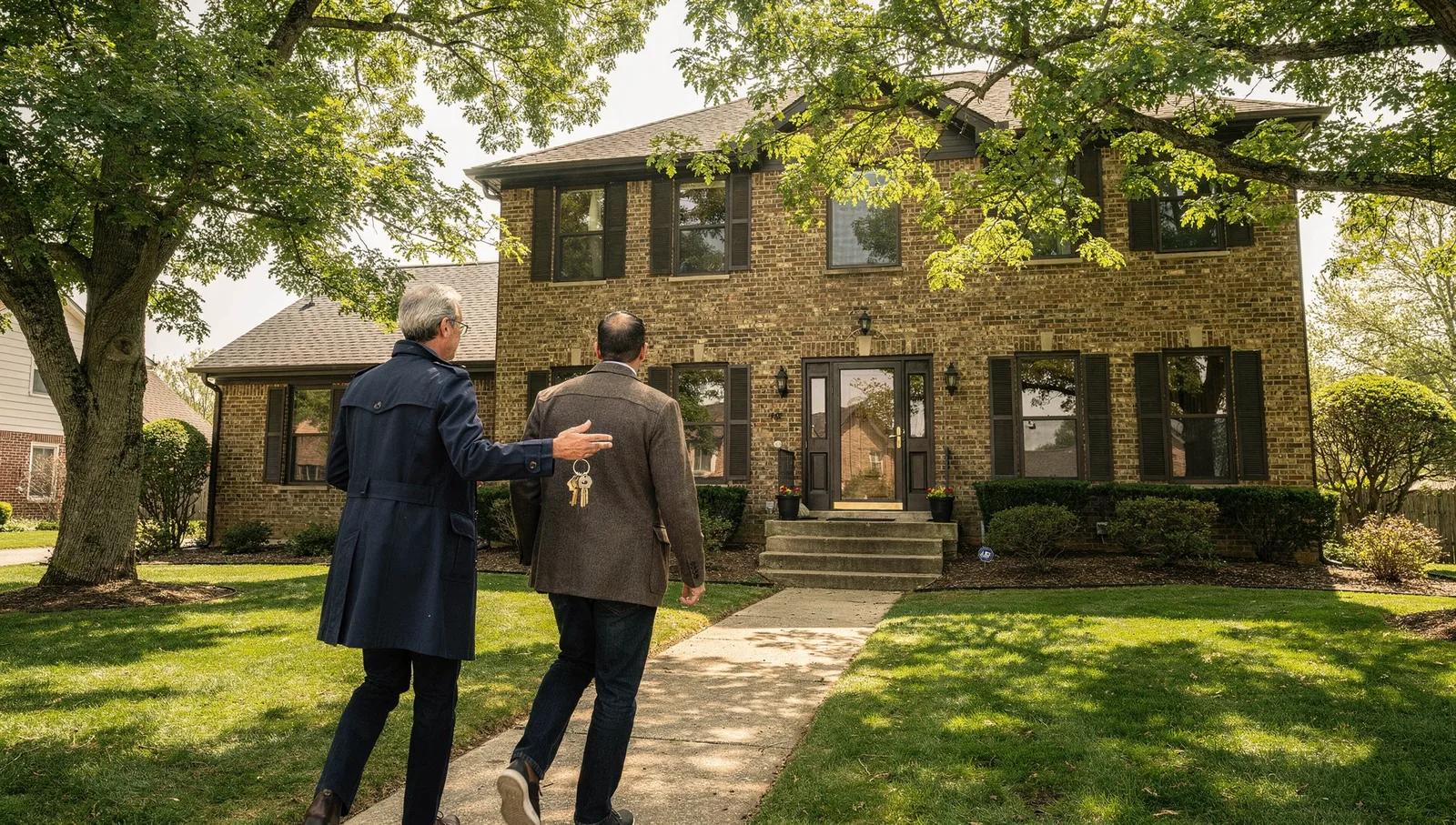
Evaluating real affordability across premier Oakland County communities requires looking past list prices directly at recurring monthly carrying costs. According to U.S. Census Bureau QuickFacts (2020 to 2024), median selected monthly owner costs with a mortgage were $2,208 in Rochester Hills (census.gov). That figure matches Troy, where monthly owner costs also sit at $2,208. In contrast, Birmingham carries a far higher baseline, showing median monthly owner costs with a mortgage of $3,461 per Census records.
| Municipality | Median Monthly Owner Costs with Mortgage (2020 to 2024) |
|---|---|
| Rochester Hills | $2,208 (census.gov) |
| Troy | $2,208 (troymi.gov) (census.gov) |
| Birmingham | $3,461 (census.gov) |
Selected monthly owner costs represent the sum of mortgage payments, real estate taxes, hazard insurance, utilities, and condominium or association fees. While home shoppers frequently ask if Rochester Hills is cheaper to live in than Birmingham, MI, the Census numbers show an ongoing monthly cost gap between the communities (census.gov). Troy and Rochester Hills function as peers on baseline monthly ownership overhead, whereas Birmingham requires substantially more capital each billing cycle to maintain the same basic residential standing.
Property Tax Rules and Effective Rates in Oakland County#
Calculating property tax in Oakland County starts by understanding how millage rates apply to an assessment base. A mill represents one dollar of tax per one thousand dollars of taxable value, meaning local obligations reflect the combined tax levies of the county, the municipality, and the local school district (troymi.gov). In Troy, the total tax rate incorporates levies for public schools, the City of Troy, and Oakland County. Under Michigan law, the primary calculation for a property's annual tax liability is:
Annual Tax Obligation = (Taxable Value / 1000) × Total Millage Rate (troymi.gov)
To prevent assessment spikes driven solely by real estate market appreciation, Michigan voters passed Proposal A in 1994 (ourmartech.com). Under Proposal A, annual taxable value increases on an existing home cannot exceed the rate of inflation or 5%, whichever is lower. That cap remains in effect every year until ownership transfers, at which point the taxable value uncaps to equal the State Equalized Value, which is half of the market value.
When comparing municipal tax burdens, effective tax rates show how much cash leaves your pocket relative to property value. According to a single provider analysis by Michigan Home Sellers, Troy features an effective tax rate of approximately 1.31% (michiganhomesellers.com), whereas Birmingham carries an effective tax rate of roughly 1.75% (2024). That divergence in effective rates creates a persistent operational difference for buyers who plan to hold real estate long term.
Overall Affordability and Cost-of-Living Metrics#
Broader economic evaluations confirm that Rochester Hills and Troy stand out across Michigan for household purchasing power. In a 2022 evaluation of Michigan small cities by WalletHub, researchers evaluated communities using metrics including median household income, cost of living, homeownership rates, housing costs, and housing burden (news.jrn.msu.edu). In that comprehensive analysis, Livonia, Troy, Allen Park, Holt, and Rochester Hills ranked as the top five most affordable small cities in Michigan.
Once complex regional tax variations and shifting cost structures start clouding your numbers, that is the point to bring in Real Estate help. The WalletHub findings reflect the reality that affordability is not merely about finding the absolute lowest home prices in Michigan (news.jrn.msu.edu). Instead, communities that combine strong incomes with manageable housing costs relative to local earnings provide superior household stability. Both Troy and Rochester Hills maintain high marks because their underlying ownership expenditures remain balanced against household financial metrics.
Parcel Acreage and Density Across the Three Markets#
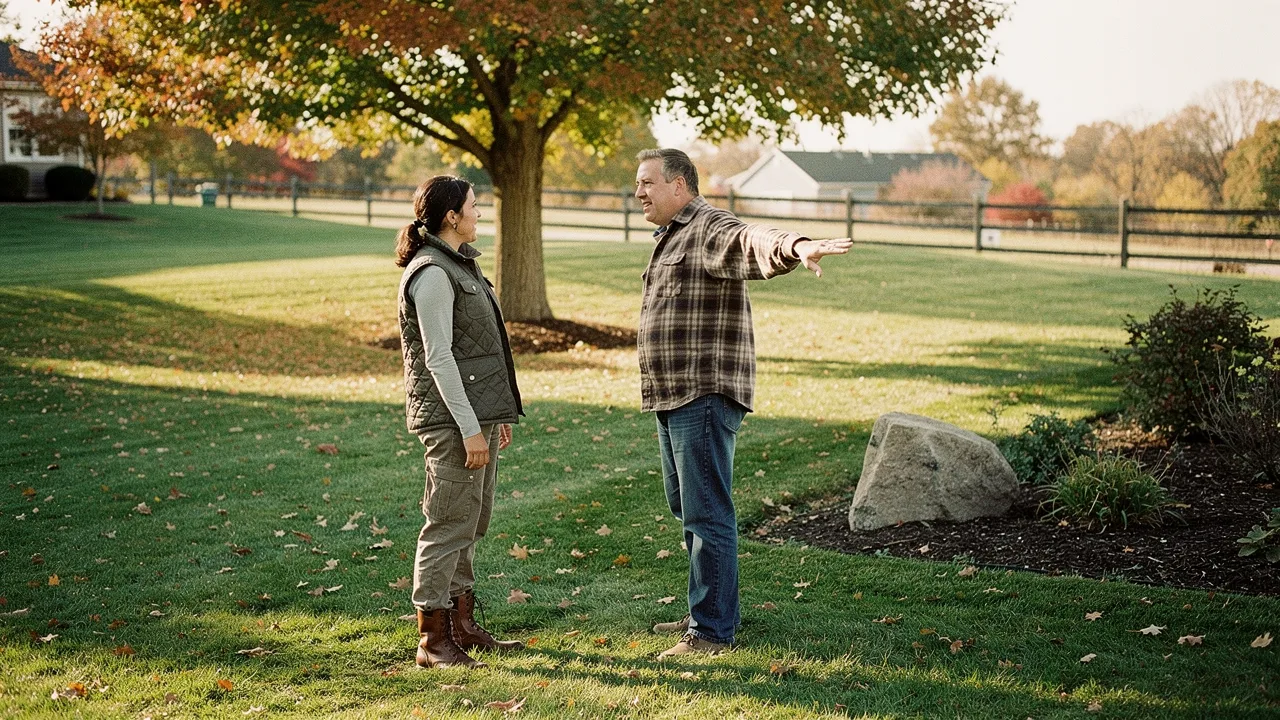
Lot sizes create another primary distinction between these northern suburban enclaves and inner-ring luxury markets. According to municipal property records compiled by County Office, the average parcel size in Rochester Hills is 0.31 acres (countyoffice.org). Troy shares a nearly identical profile, with an average parcel size of 0.309 acres (also recorded as 0.31 acres), where most residential lots span between 0.21 acres and 0.509 acres.
- Parcel Density
- Birmingham (0.169 acres)
- Troy (0.309 acres)
- Rochester Hills (0.31 acres)
| Municipality | Average Parcel Size (Acres) | Typical Lot Size Range (Acres) |
|---|---|---|
| Rochester Hills | 0.31 (countyoffice.org) | Not reported |
| Troy | 0.309 (0.31) (countyoffice.org) | 0.21 to 0.509 |
| Birmingham | 0.169 (countyoffice.org) | Not reported |
Birmingham features a far denser development pattern, with an average lot size of just 0.169 acres according to property records (countyoffice.org). Buyers choosing Rochester Hills receive larger lots on average than those buying in Birmingham. That extra acreage delivers greater separation between structures, room for detached additions, and expansive outdoor utility without pushing baseline monthly carrying costs above Troy's levels (census.gov).
Homeowners Association Dues Across Local Subdivisions#
Subdivision association assessments vary across neighborhoods, directly impacting discretionary property budgets.
Subdivisions with Nominal or Suggested Dues Under $50 (troymi.gov)#
Several established subdivisions rely on low annual dues or entirely voluntary support to handle minor neighborhood signage and social operations:
- Long Lake Village Homeowners Association: Charges $25 annually, which comes due each January (troymi.gov).
- Mount Vernon Estates Homeowners Association: Sets annual dues at $30, due June 1.
- Pine Hill Civic Improvement Association: Suggests a $20 voluntary donation for dues rather than enforcing a mandatory billing schedule.
Subdivisions with Annual Dues Between $50 and $150#
Mid-tier associations frequently manage modest common areas, island landscaping, and regular neighborhood events:
- Stoneridge Homeowners Improvement Association: Collects $75 annually, due March 1 (troymi.gov).
- Sugar Maple Village Homeowners Association: Assesses $75 annually, due February 28.
- Morel East Homeowners Association: Bills $100 annually, due February 13.
- Orchard Hills of Troy: Requires mandatory dues of $150 annually, due April 30.
Subdivisions with Annual Dues Exceeding $200 (troymi.gov)#
Higher association dues generally support larger dedicated shared acreage, professional grounds maintenance, and distinctive entrance structures:
- Oak River West Subdivision Association: Collects $212 annually, due April 1 (troymi.gov).
- Timbercrest Homeowners Association: Assesses $225 annually.
- Beach Forest Subdivision: Sets annual dues at $350, due February 1.
Next Steps for Oakland County Buyers#
- Review public assessment histories: Access city tax records to check current taxable value against the State Equalized Value so you can project the tax reset under Proposal A rules (troymi.gov; ourmartech.com).
- Calculate parcel utility: Compare the property's recorded acreage against local averages (such as 0.31 acres in Rochester Hills or 0.169 acres in Birmingham) to verify value per square foot of land (countyoffice.org).
- Verify association covenants: Contact the neighborhood association directly to confirm whether annual fees fall under nominal rates or higher annual commitments (troymi.gov).
Partnering with a professional real estate sales specialist ensures that your purchase accounts for uncapped taxes, true parcel utility, and long-term appreciation across Rochester, Troy, and surrounding Oakland County neighborhoods.
| Municipality | Median Monthly Owner Costs with Mortgage (2020 to 2024) | Effective Property Tax Rate | Average Parcel Size (Acres) | WalletHub Small City Affordability Top 5 |
|---|---|---|---|---|
| Rochester Hills | $2,208 | Not reported | 0.31 | Yes |
| Troy | $2,208 | ~1.31% | 0.309 (0.31) | Yes |
| Birmingham | $3,461 | ~1.75% | 0.169 | Not reported |
| Neighborhood Association | Annual Dues | Due Date | Mandatory vs. Voluntary |
|---|---|---|---|
| Pine Hill Civic Improvement Association | $20 | Not reported | Voluntary donation suggested |
| Long Lake Village Homeowners Association | $25 | January | Standard dues |
| Mount Vernon Estates Homeowners Association | $30 | June 1 | Standard dues |
| Stoneridge Homeowners Improvement Association | $75 | March 1 | Standard dues |
| Sugar Maple Village Homeowners Association | $75 | February 28 | Standard dues |
| Morel East Homeowners Association | $100 | February 13 | Standard dues |
| Orchard Hills of Troy | $150 | April 30 | Mandatory |
| Oak River West Subdivision Association | $212 | April 1 | Standard dues |
| Timbercrest Homeowners Association | $225 | Not reported | Standard dues |
| Beach Forest Subdivision | $350 | February 1 | Standard dues |
Oakland County Monthly Housing Cost & Millage Calculator
Estimates your monthly carrying cost (principal, interest, property taxes, and hazard insurance) across Rochester Hills, Troy, and Birmingham. In Michigan, the State Equalized Value (taxable base upon purchase) resets to 50% of the true cash value (purchase price), and local principal residence exemption (homestead) millage rates apply per $1,000 of taxable value.
Down Payment Amount:
Loan Amount:
Monthly Principal & Interest:
Estimated Annual Property Tax (Year 1):
Estimated Monthly Property Tax:
Total Estimated Monthly Carrying Cost:
Frequently Asked Questions
Is Rochester Hills cheaper to live in than Birmingham, MI?
Yes. U.S. Census Bureau QuickFacts (2020 to 2024) shows median monthly owner costs with a mortgage were $2,208 in Rochester Hills compared to $3,461 in Birmingham, making Birmingham significantly more expensive.
How do home prices in Troy compare to Rochester Hills?
Census QuickFacts (2020 to 2024) records identical median monthly owner costs with a mortgage of $2,208 for both Troy and Rochester Hills. Both also ranked among Michigan's top five most affordable small cities in a WalletHub study.
Which Oakland County city has the lowest property taxes: Rochester Hills, Troy, or Birmingham?
Between Troy and Birmingham, Troy has a lower effective property tax rate at roughly 1.31%, compared to approximately 1.75% in Birmingham. A specific rate for Rochester Hills was not reported.
What are the cheapest places to live in Michigan?
In a WalletHub study assessing median household income, cost of living, homeownership rates, and housing costs, the top five most affordable small cities were Livonia, Troy, Allen Park, Holt, and Rochester Hills.
Disclaimer
This article is for general information only and is not legal, tax, or financial advice. Real estate rules and market conditions vary, so confirm details with a licensed professional before making decisions.
Sources
- U.S. Census Bureau QuickFacts: Troy city, Michigan; Birmingham city, Michigan - census.gov (accessed 2026)
- Some Michigan small cities more affordable than others - Spartan Newsroom - news.jrn.msu.edu (2022-01-13)
- Welcome to City of Troy, Michigan - troymi.gov (accessed 2026)
- Millage Rates - troymi.gov (accessed 2026)
- Troy, MI Property Records - CountyOffice.org - countyoffice.org (accessed 2026)
- Troy Realtor | RE/MAX The Collective Agency - michiganhomesellers.com (2024-08-28)
- Housing Report - ourmartech.com (accessed 2026)